Burden of Dreams
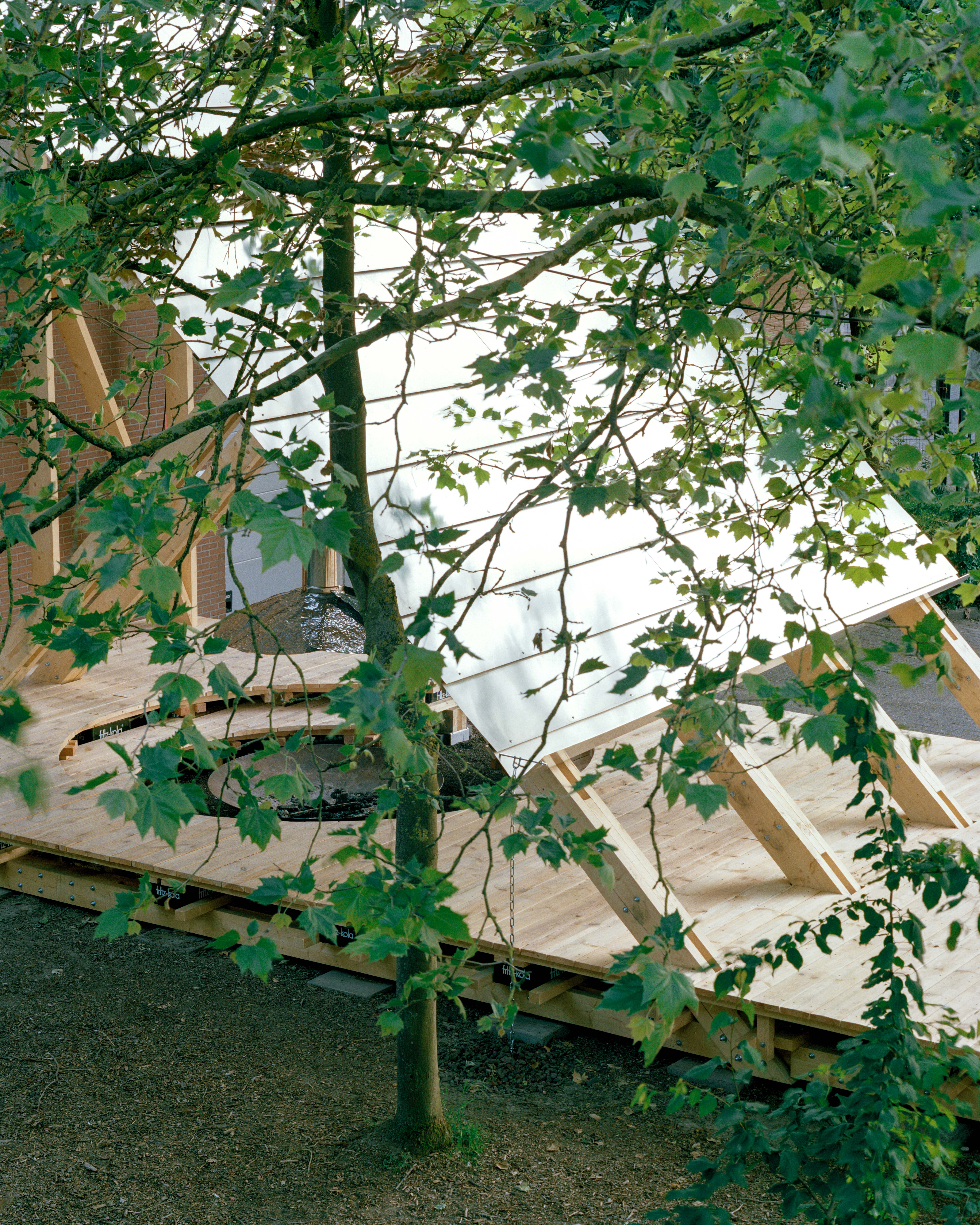
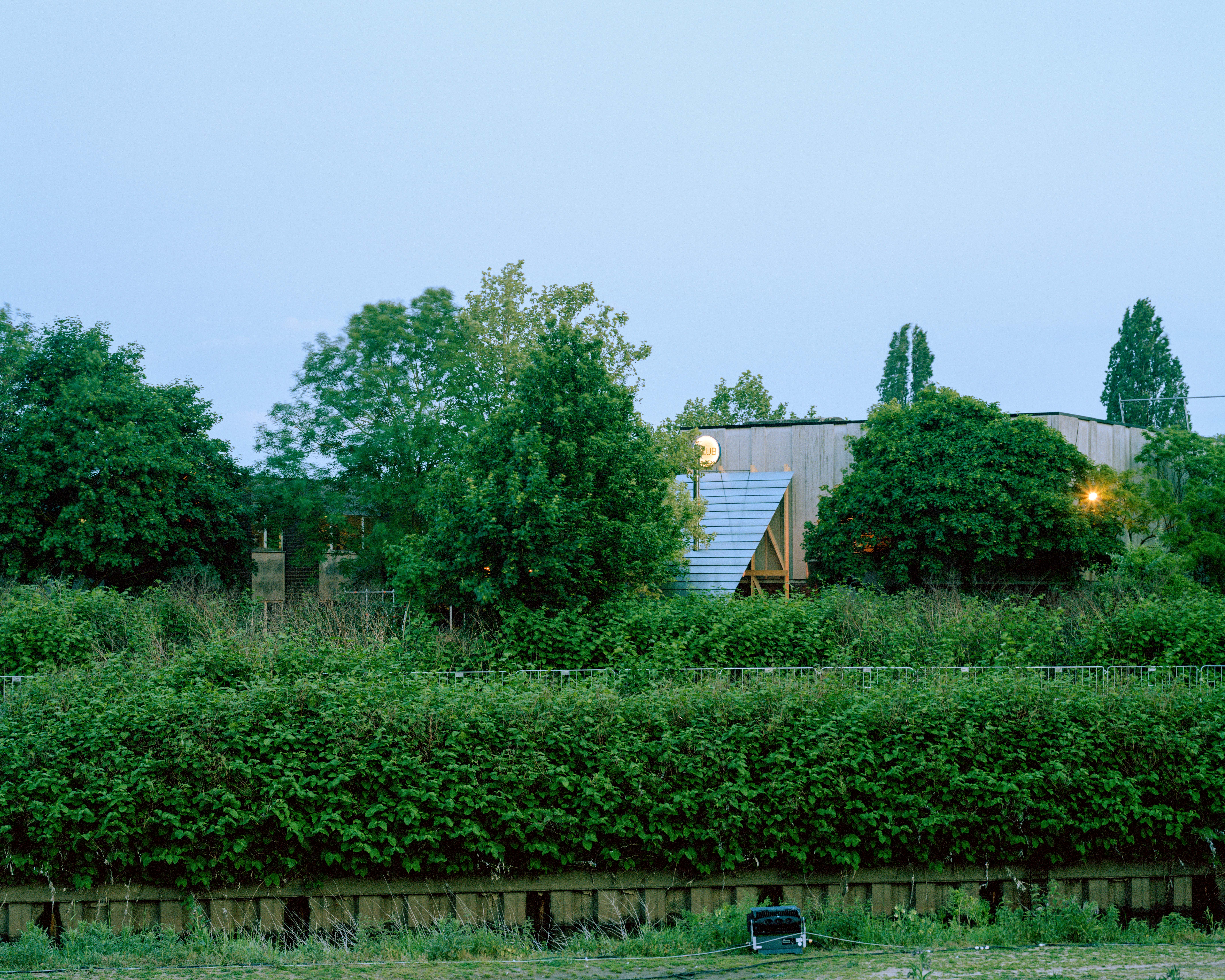
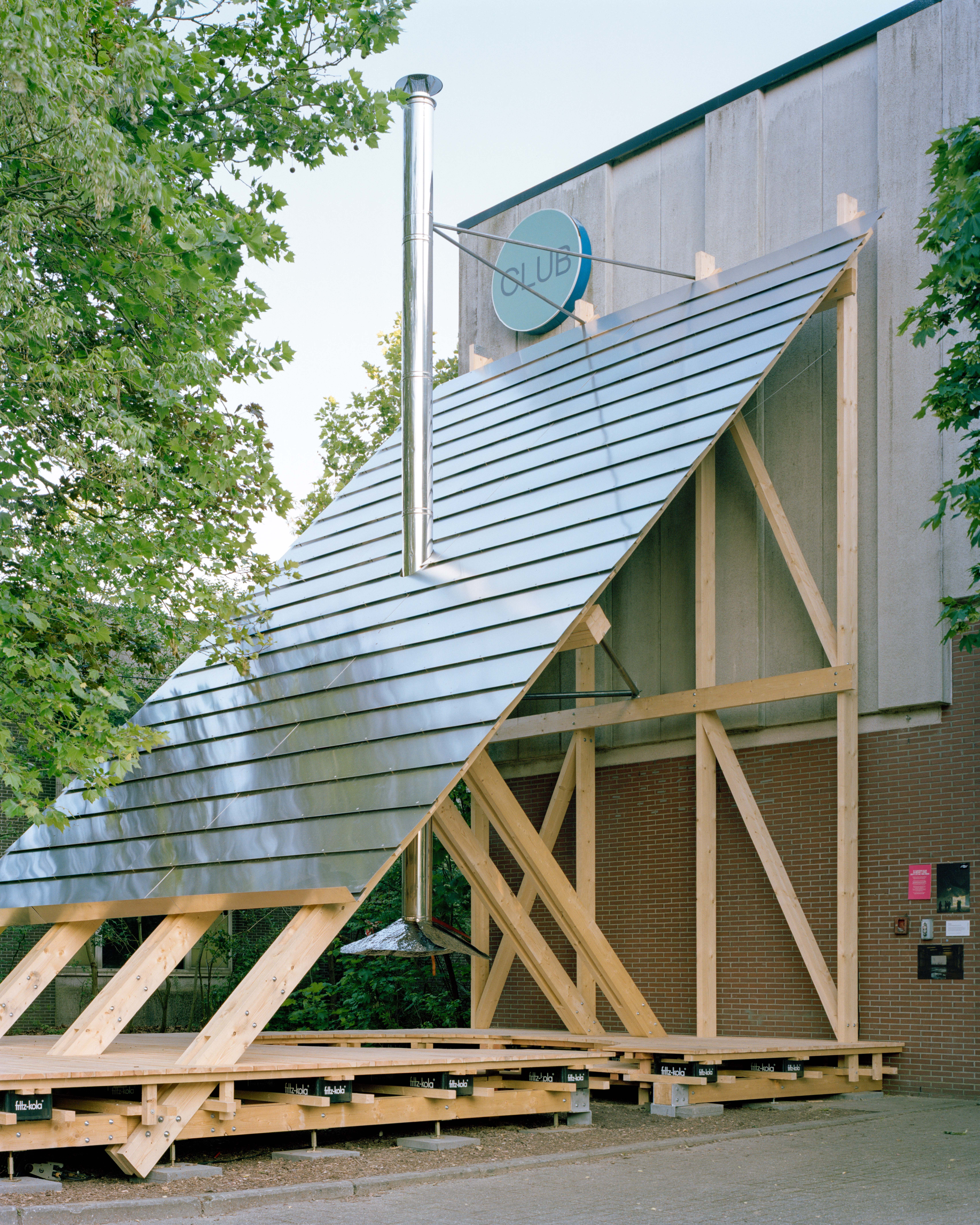
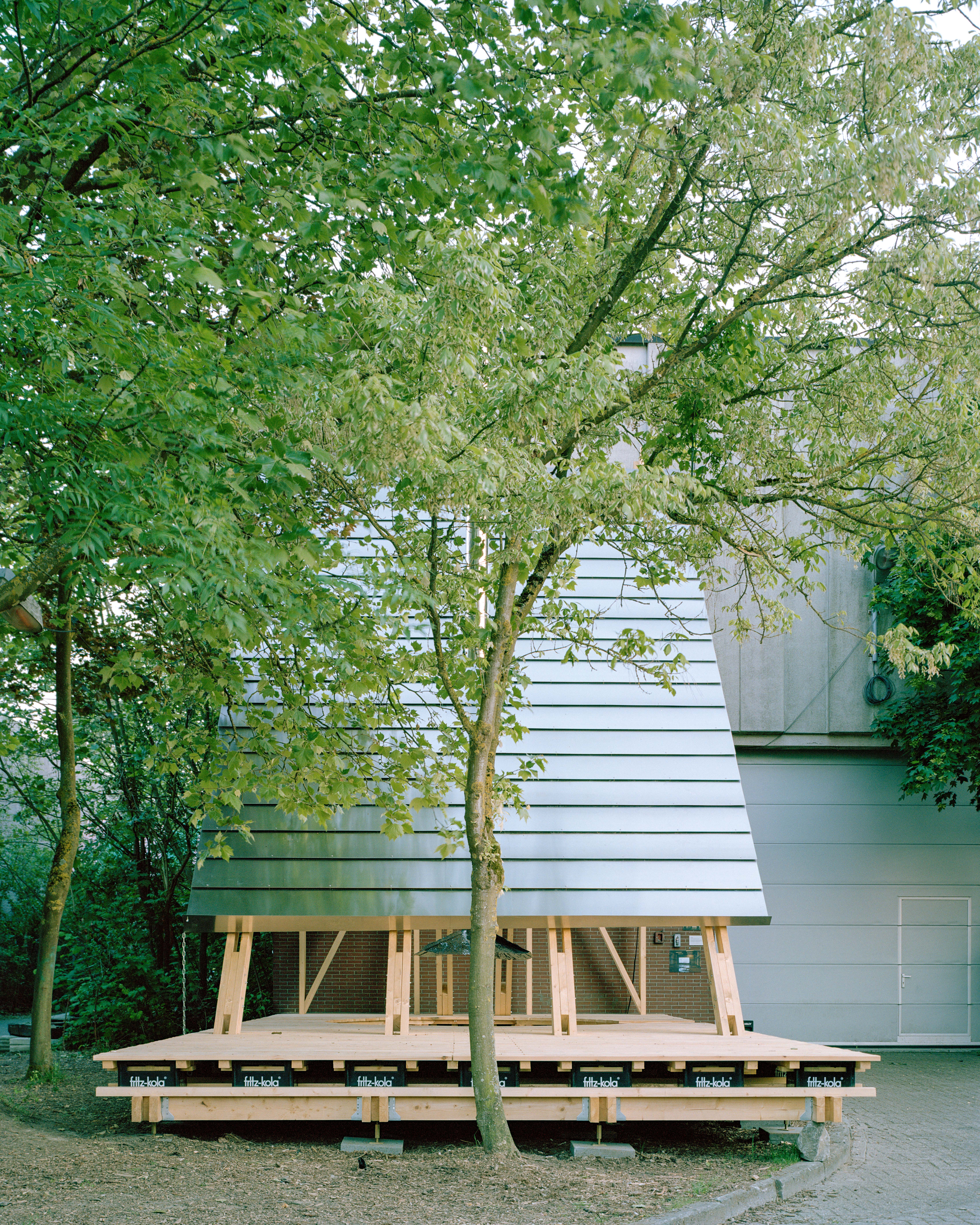
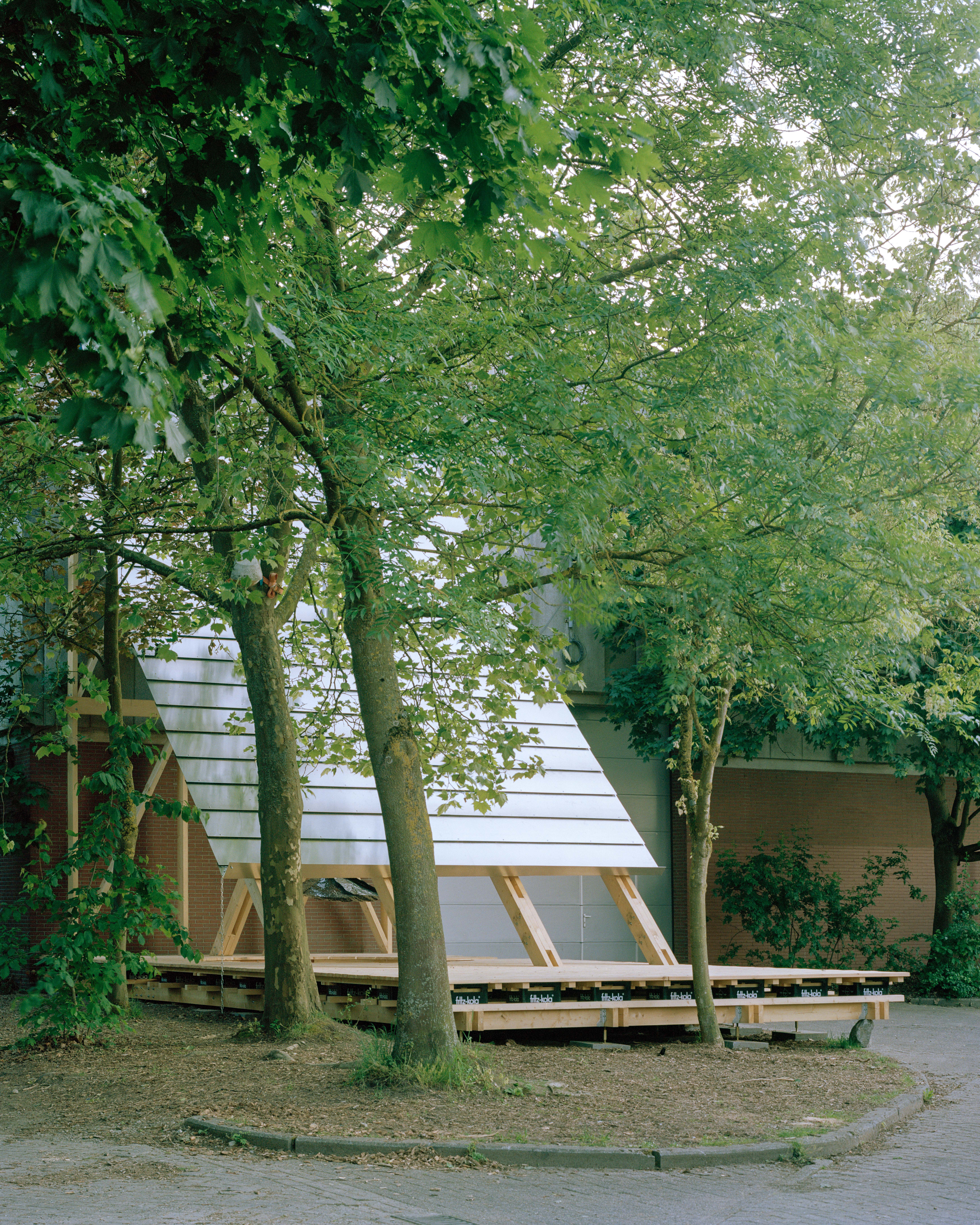
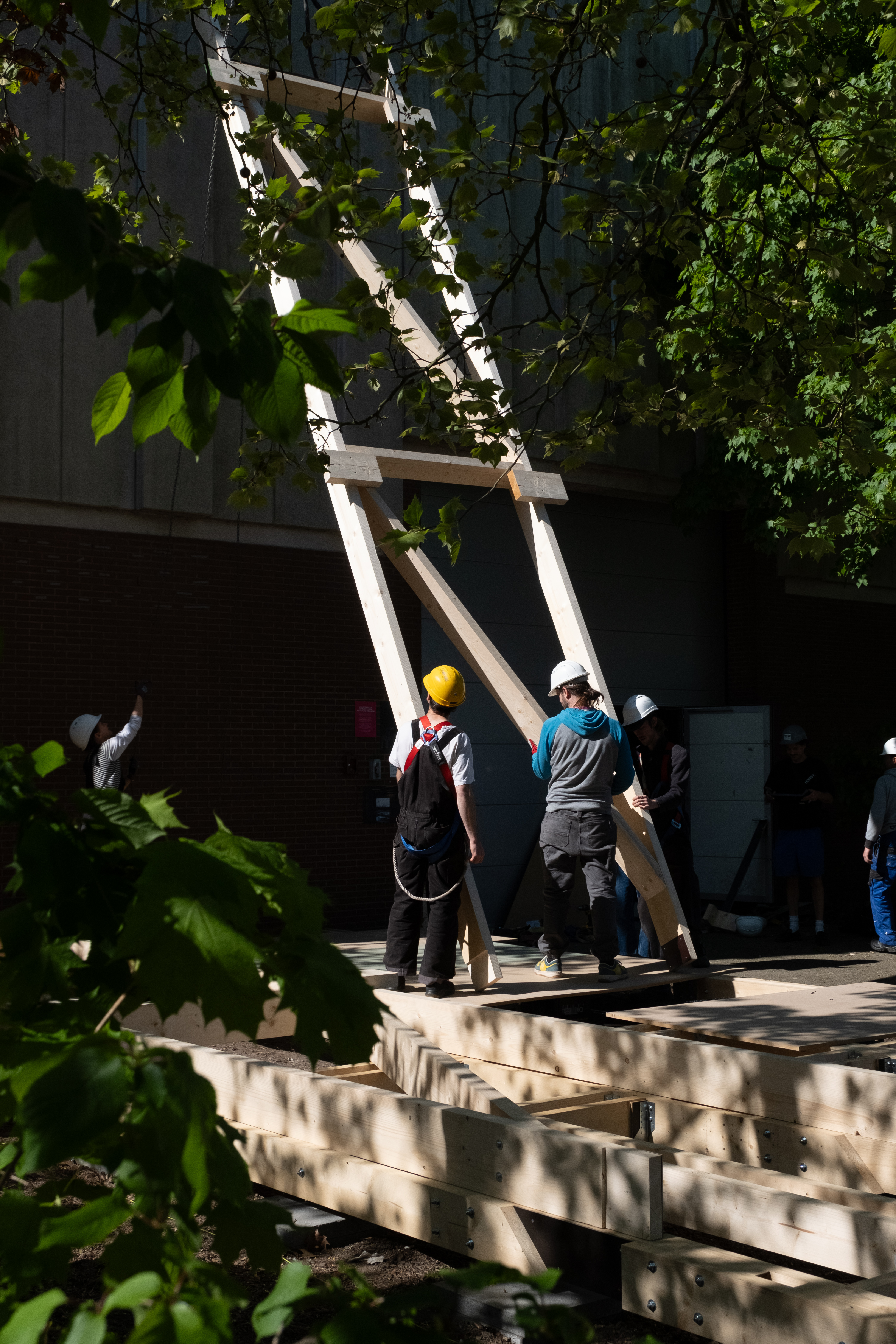
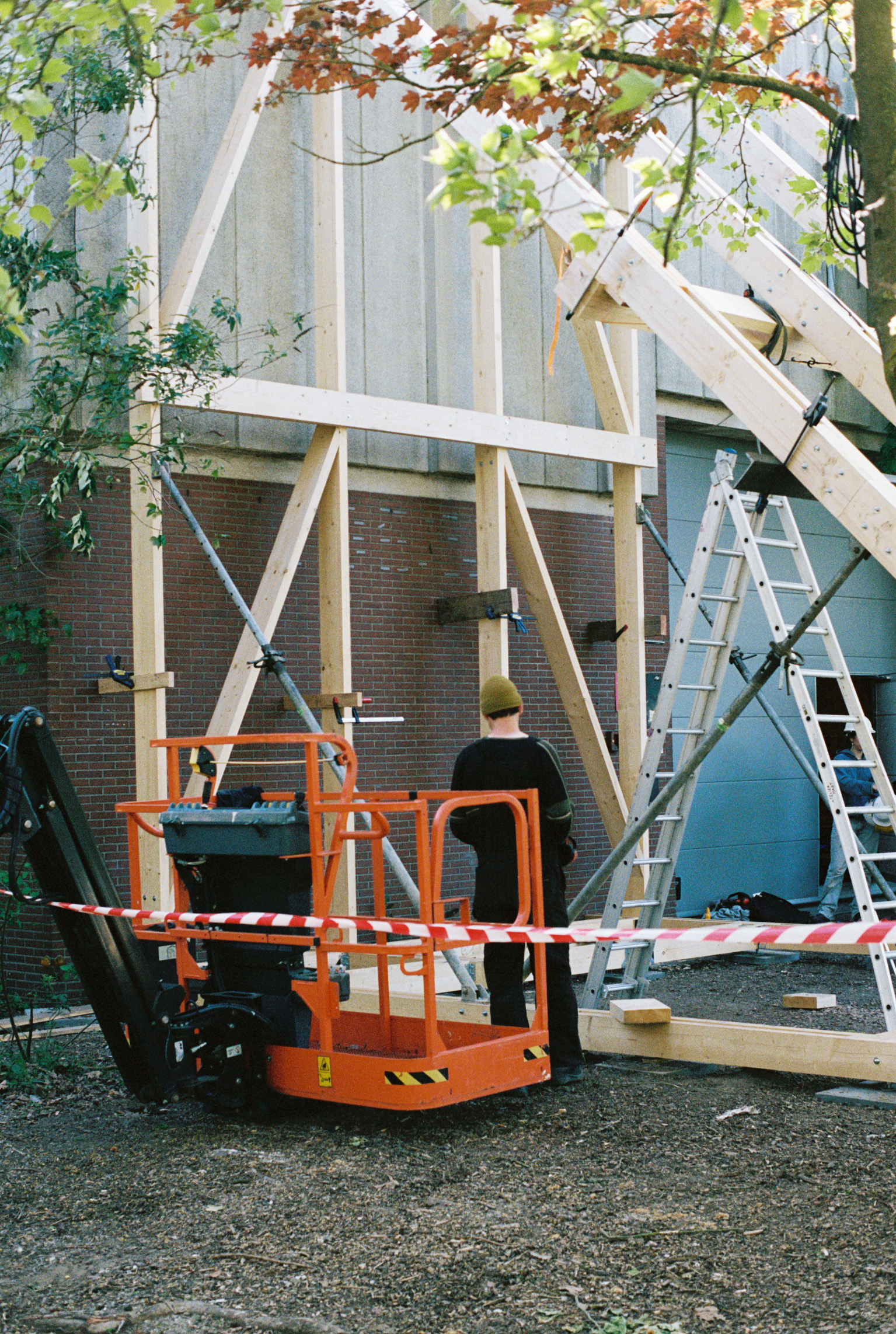
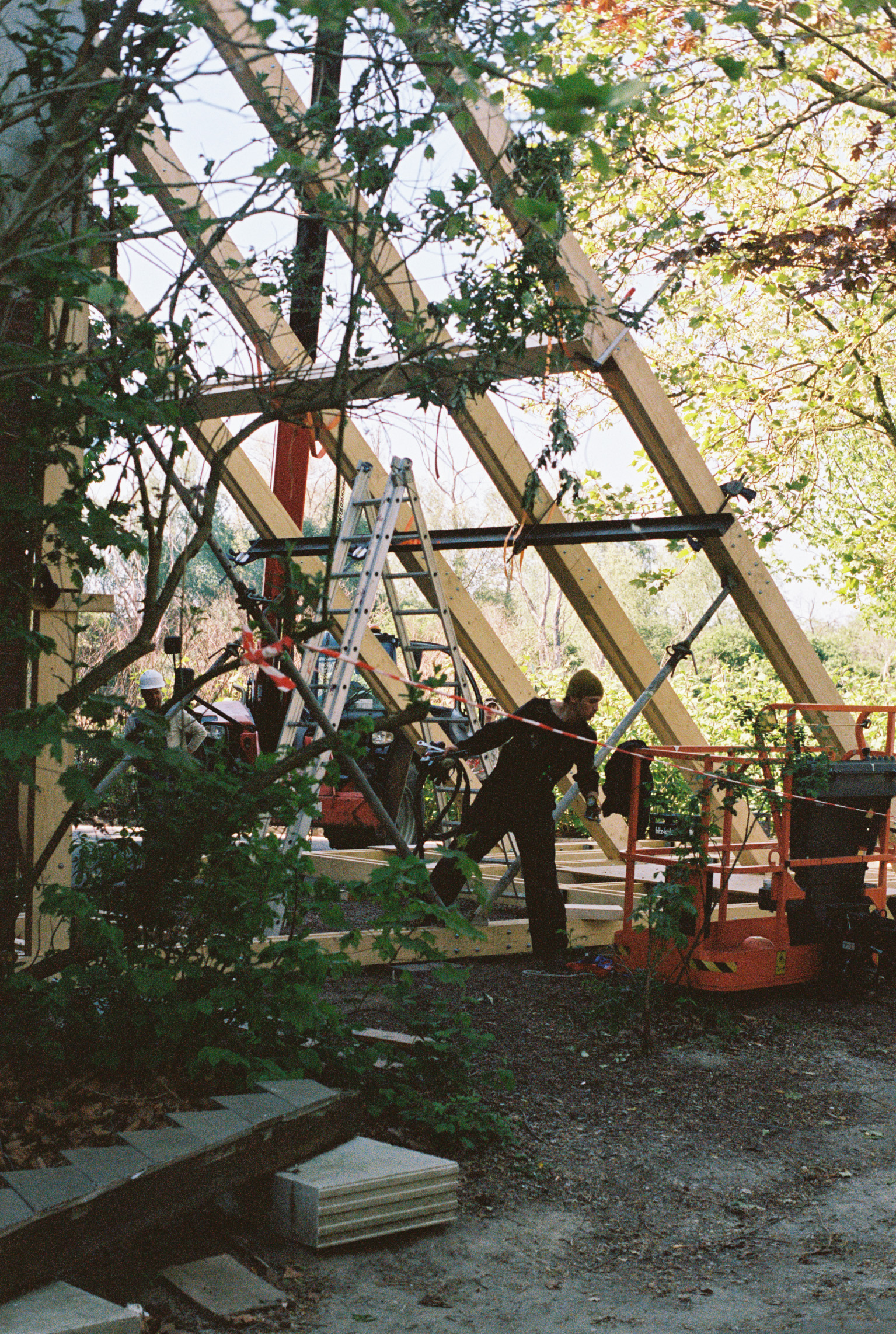
Burden of Dreams transforms a residual interstitial strip of land into a collective hearth. Caught between a façade and surrounding flows, the site is redefined through a single architectural gesture: a sloping plane leaning against an existing wall, forming a minimal yet generous shelter.
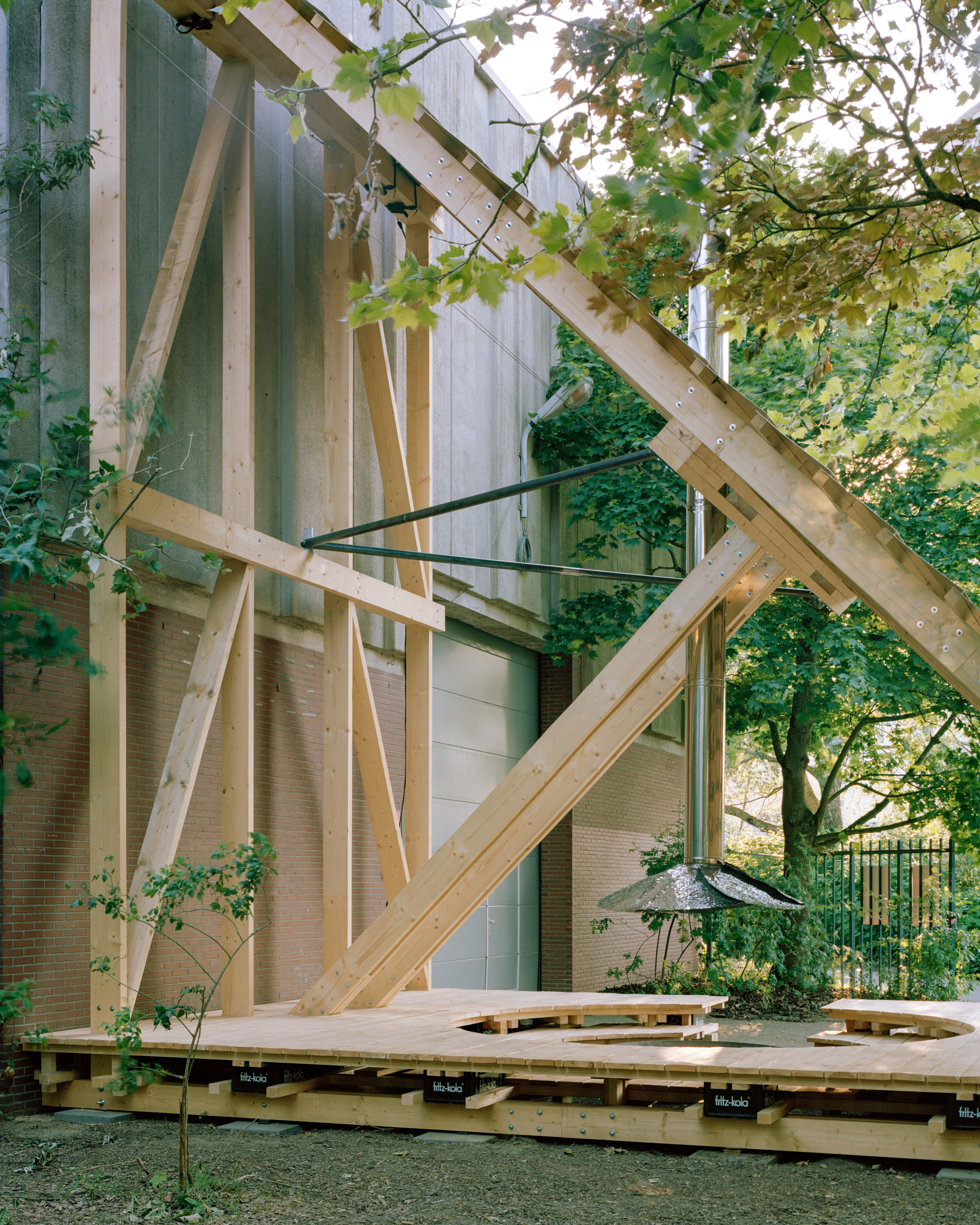
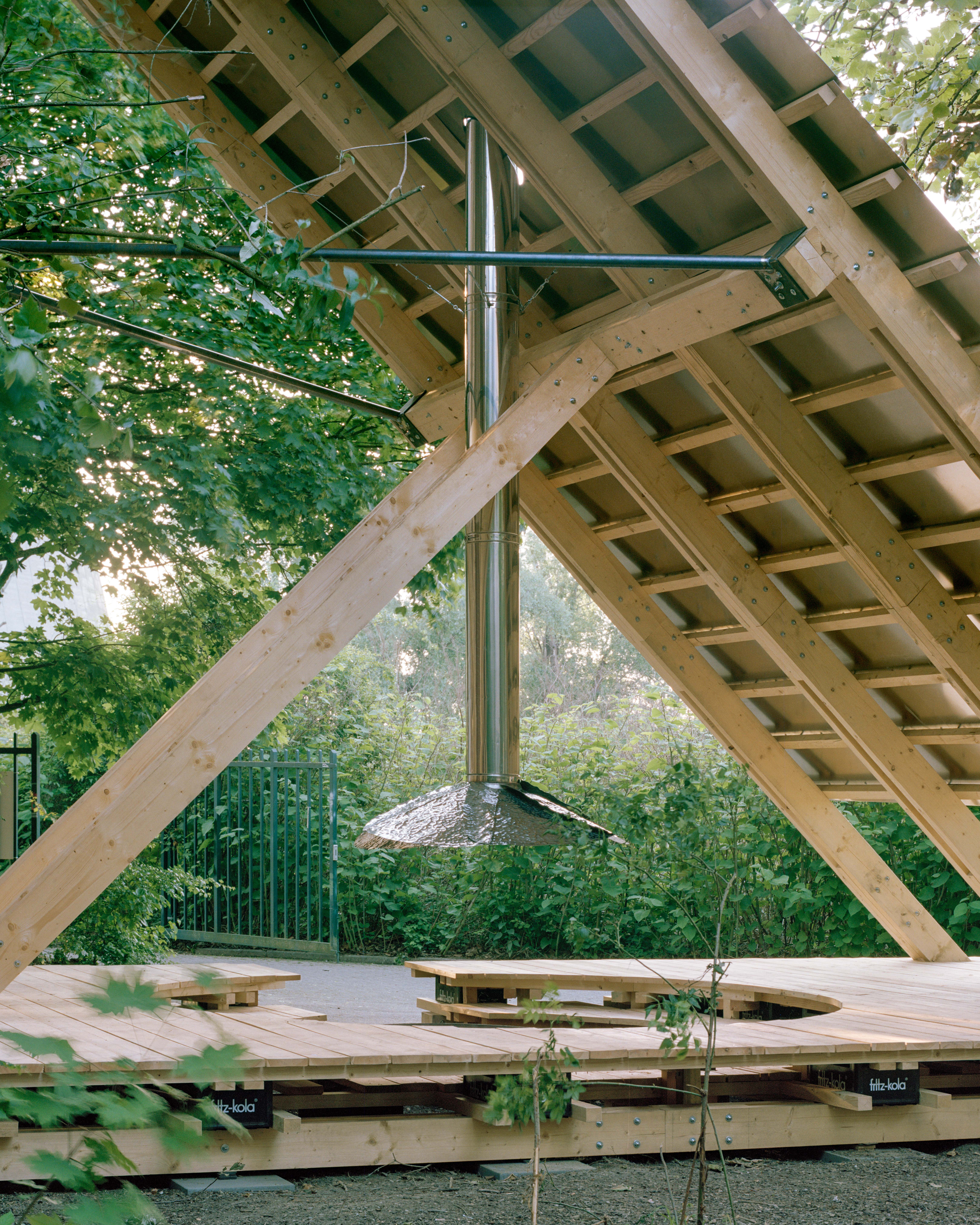
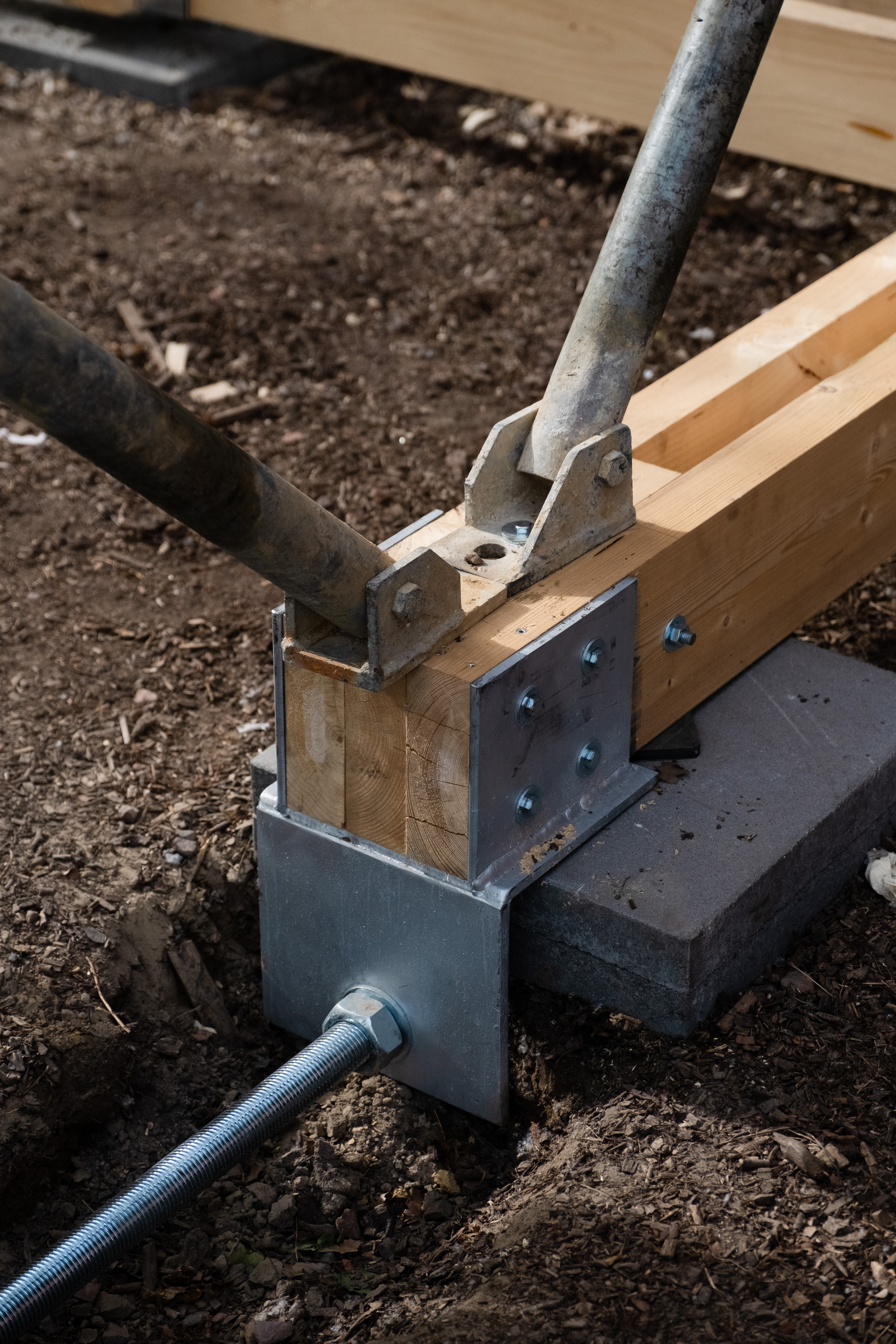
Rather than introducing an autonomous object, the project operates by grafting itself onto what is already there. The wall becomes structure, limit, and protection, while a diagonal frame establishes an ambiguous relationship of support, blurring the hierarchy between existing and added elements.
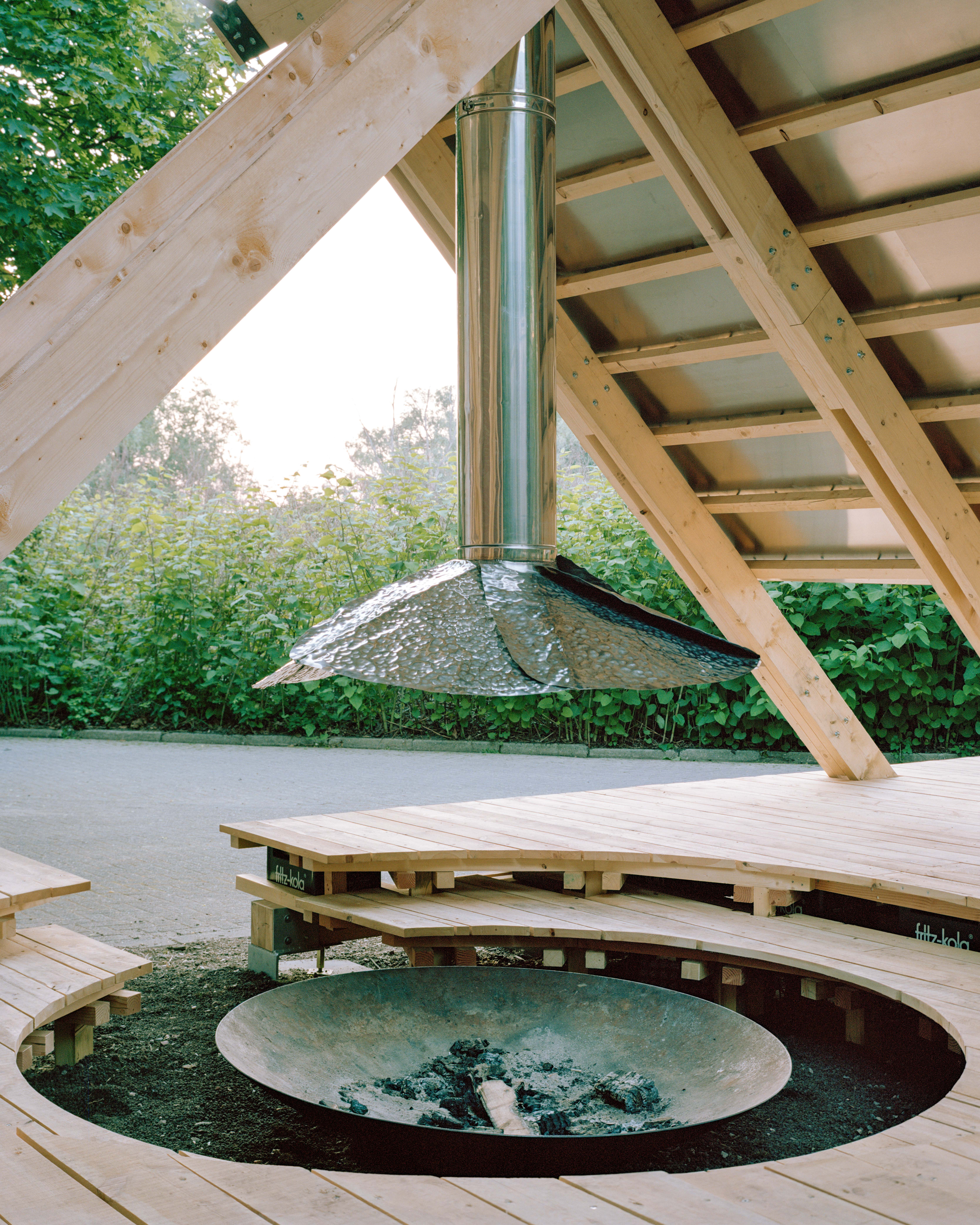
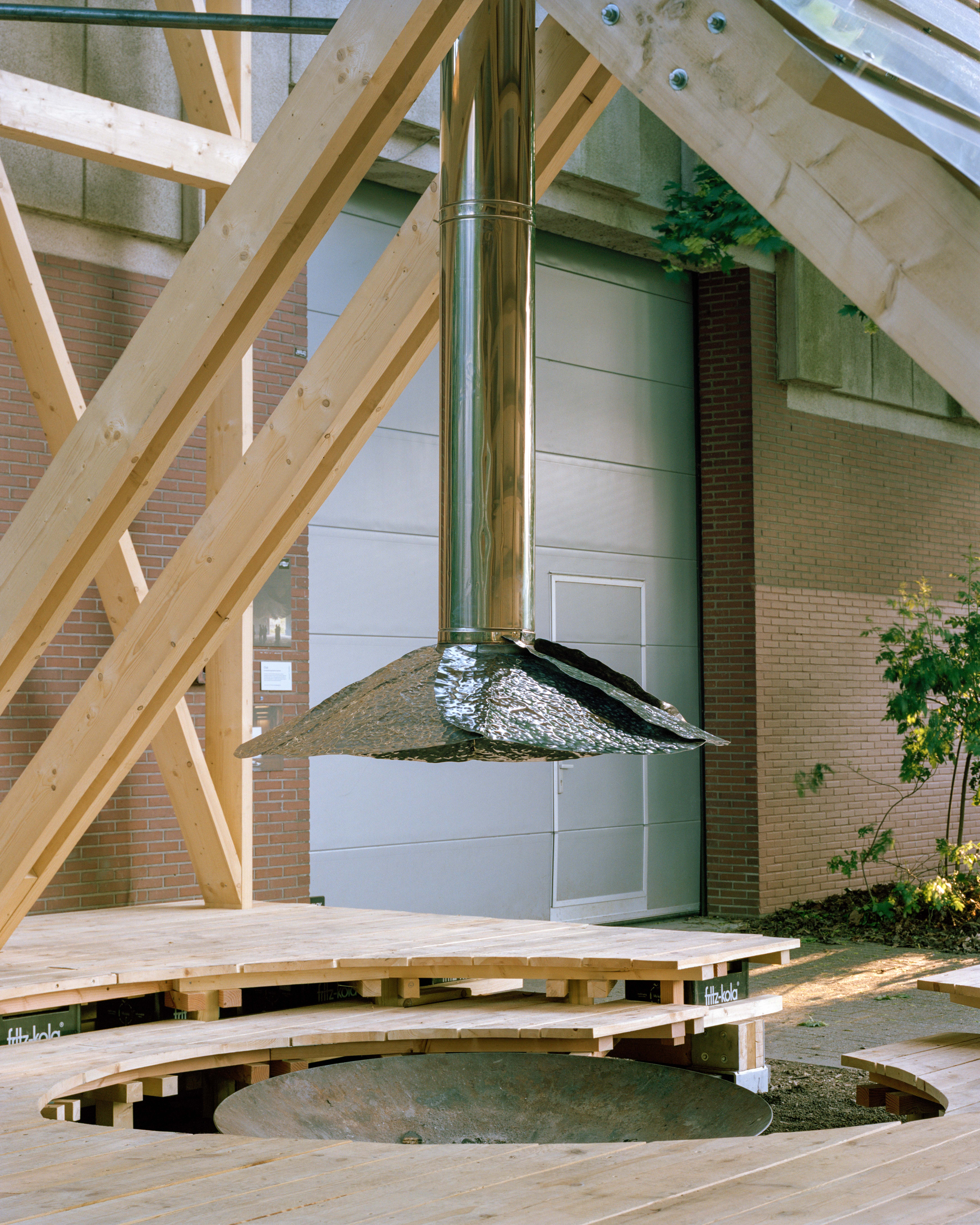
The intervention is composed of five elements, wall, structure, platform, hearth, and roof, whose interplay defines an open, indeterminate interior. At its center, the fire acts as a social condenser, anchored by a handcrafted chimney hood conceived as a singular piece, both functional and symbolic.
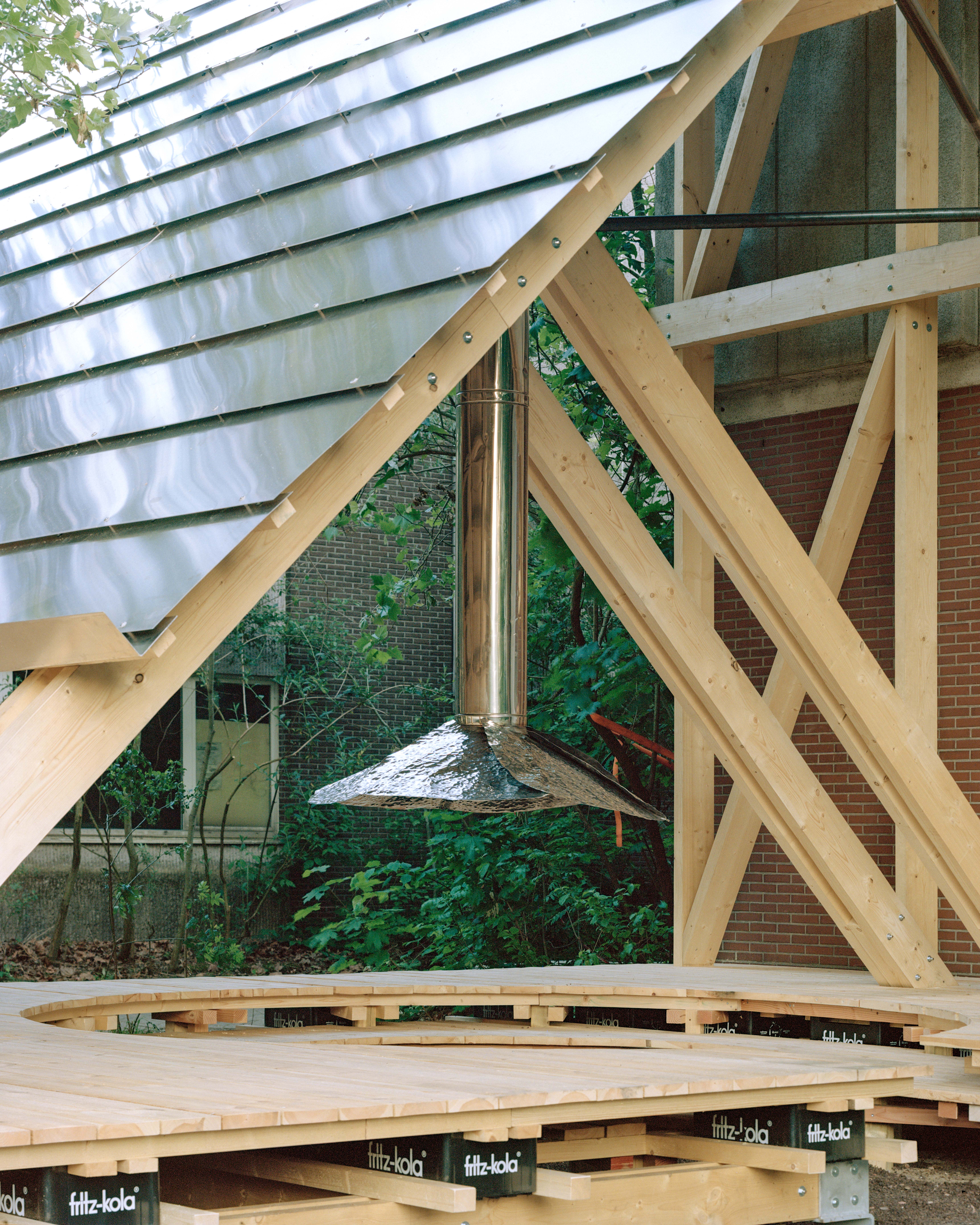
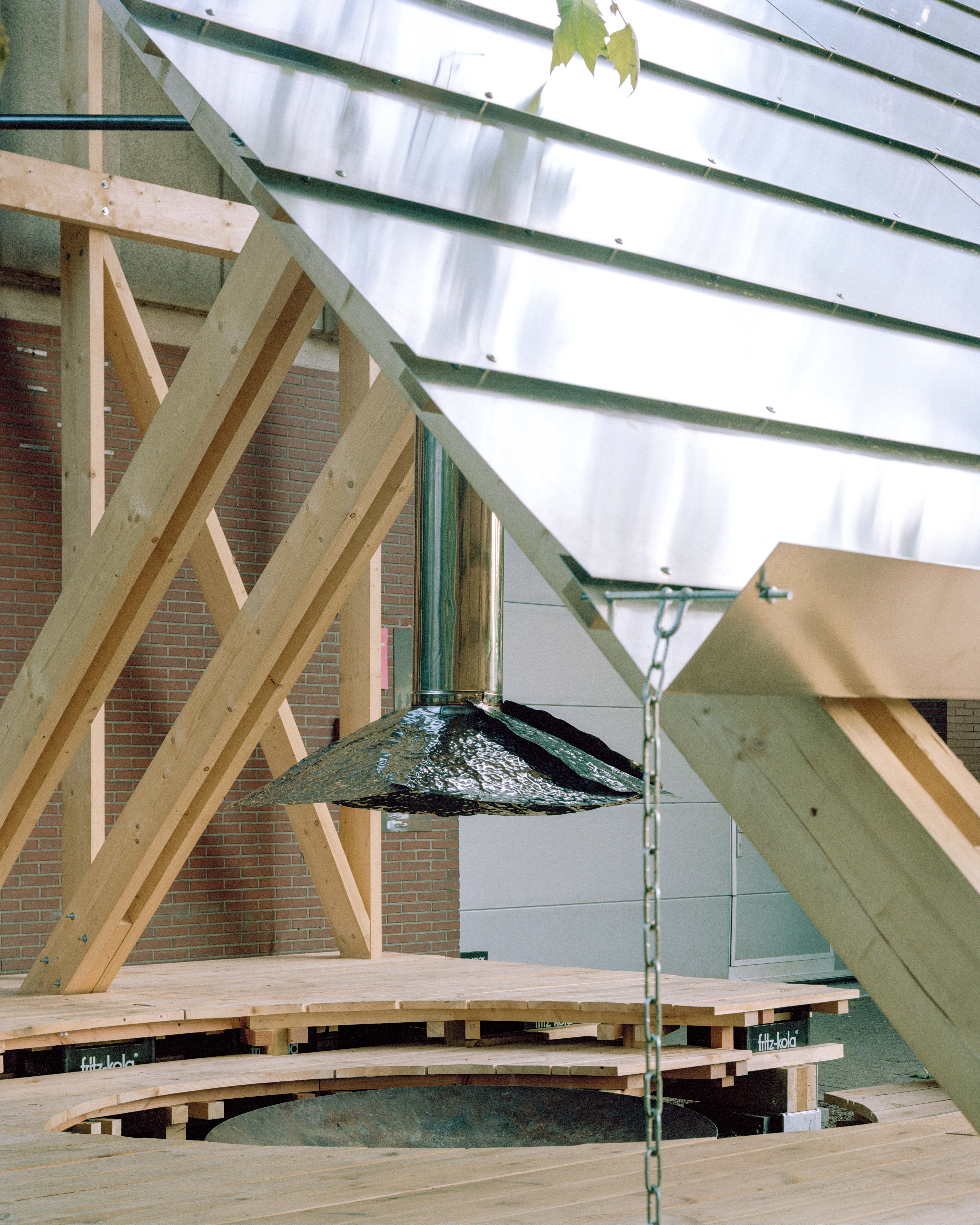
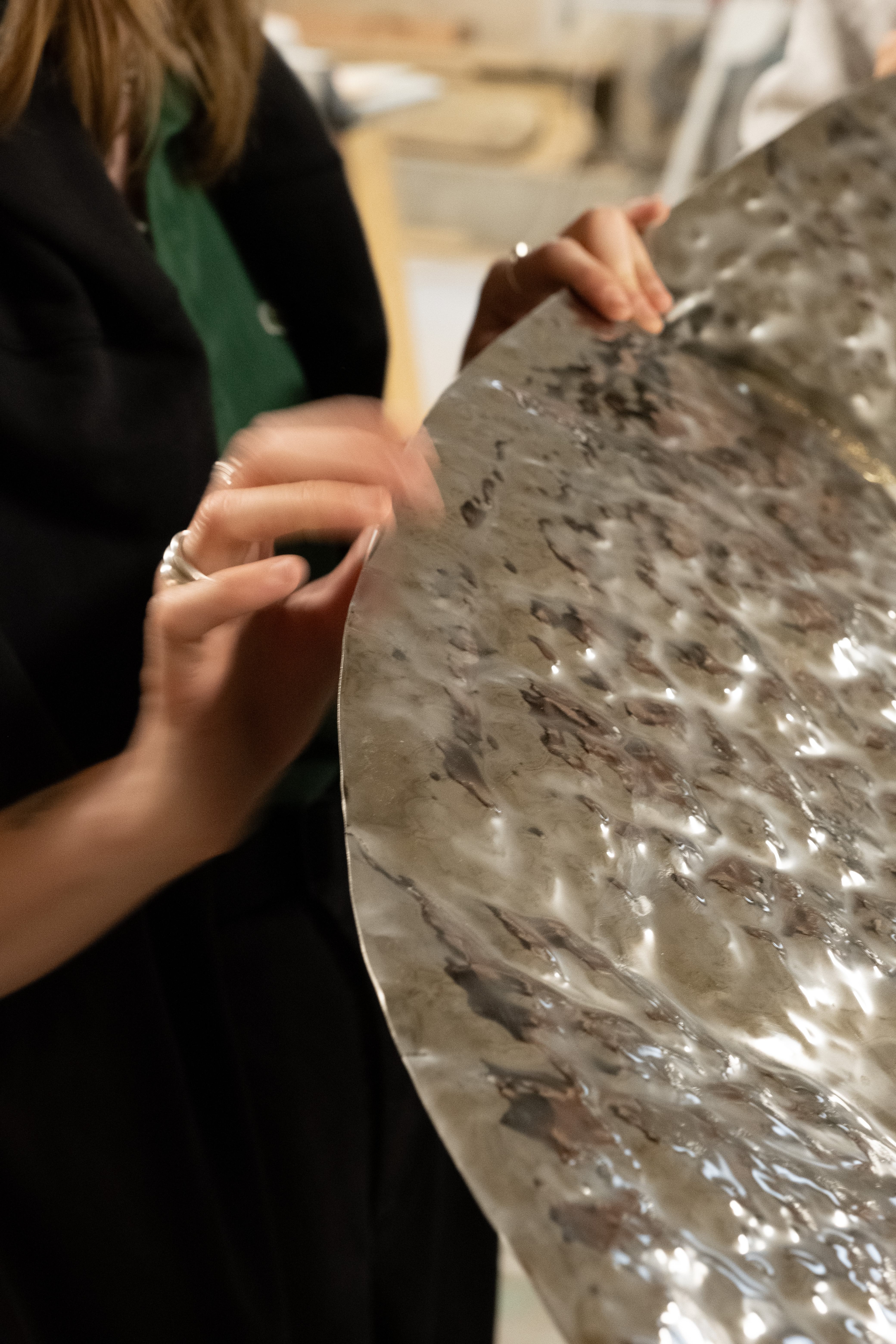
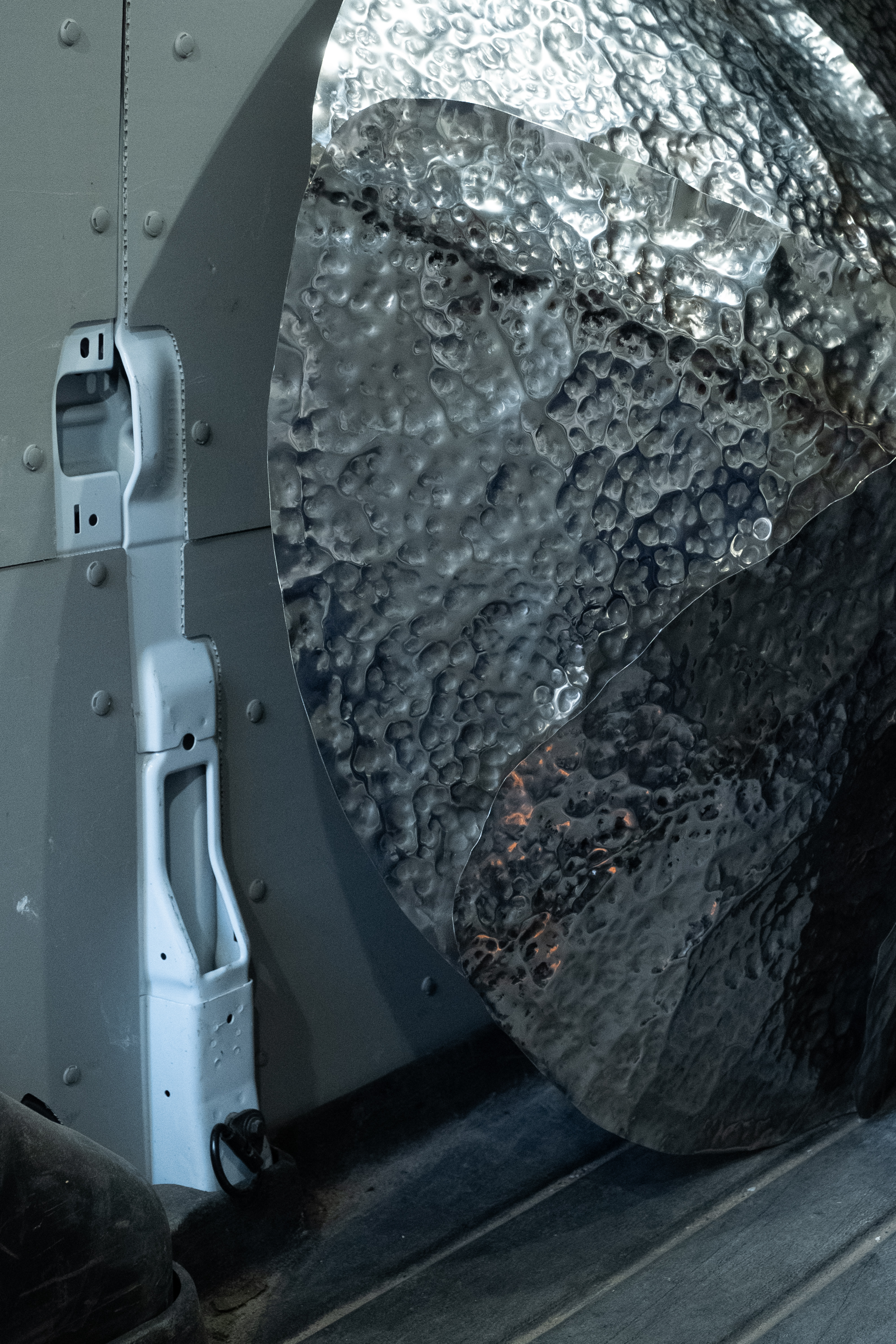
Constructed entirely from reclaimed components, the project embraces reuse as both constraint and driver. The roof, made of raw reused aluminium sheets, amplifies this approach: its reflective surface captures the fire and its users from within, while mirroring the surrounding canopy from without, allowing the pavilion to oscillate between presence and disappearance.
Through minimal means, the project reactivates a space of passage into a place of gathering, where architecture becomes both infrastructure and ritual device.
Diagram